What's the Best Cooling Solution for NVIDIA RTX 4000 Ada 20GB During AI Workloads?

Introduction: Keeping Your AI Engine Cool
Dive into the world of local AI and Large Language Models (LLMs), where the thrill of building and running these powerful models meets the challenge of keeping your hardware happy. One of the biggest headaches for users running LLMs is heat. These models are like super-powered brains that demand a lot from your hardware, especially your GPU.
This article focuses on the NVIDIA RTX 4000 Ada 20GB, a popular GPU choice for local LLM work. We'll break down the impact of heat on your AI engine, explore the best cooling solutions to keep it running smoothly, and even look at how different LLM models and configurations affect GPU temperature.
The Heat Is On: Why Cooling Matters
Imagine your GPU as a high-performance race car engine. Pushing it to its limits (like running LLMs) generates a lot of heat. This heat can significantly impact your GPU's performance and even lead to throttling, a situation where the GPU slows down to protect itself from overheating.
Think of it like this: a high-powered race car engine needs a powerful cooling system to perform at its peak. Similarly, your GPU needs proper cooling to operate efficiently and deliver the best performance for your AI workloads.
The NVIDIA RTX 4000 Ada 20GB: A Beast of a GPU
The NVIDIA RTX 4000 Ada 20GB is a powerful GPU designed for demanding tasks like AI and machine learning. However, like any high-performance engine, it needs proper cooling to sustain its peak performance.
How does the RTX 4000 Ada 20GB fare with different LLMs?
Let's explore the performance and temperature data for different LLM models running on the RTX 4000 Ada 20GB. We'll focus on Llama 3, one of the most popular open-source LLMs.
We'll be looking at tokenization, which is the process of converting text into numerical representations that the LLM can understand. Think of it as the language translator of the AI world!
Llama 3 Tokenization: A Deep Dive into Performance & Temperature
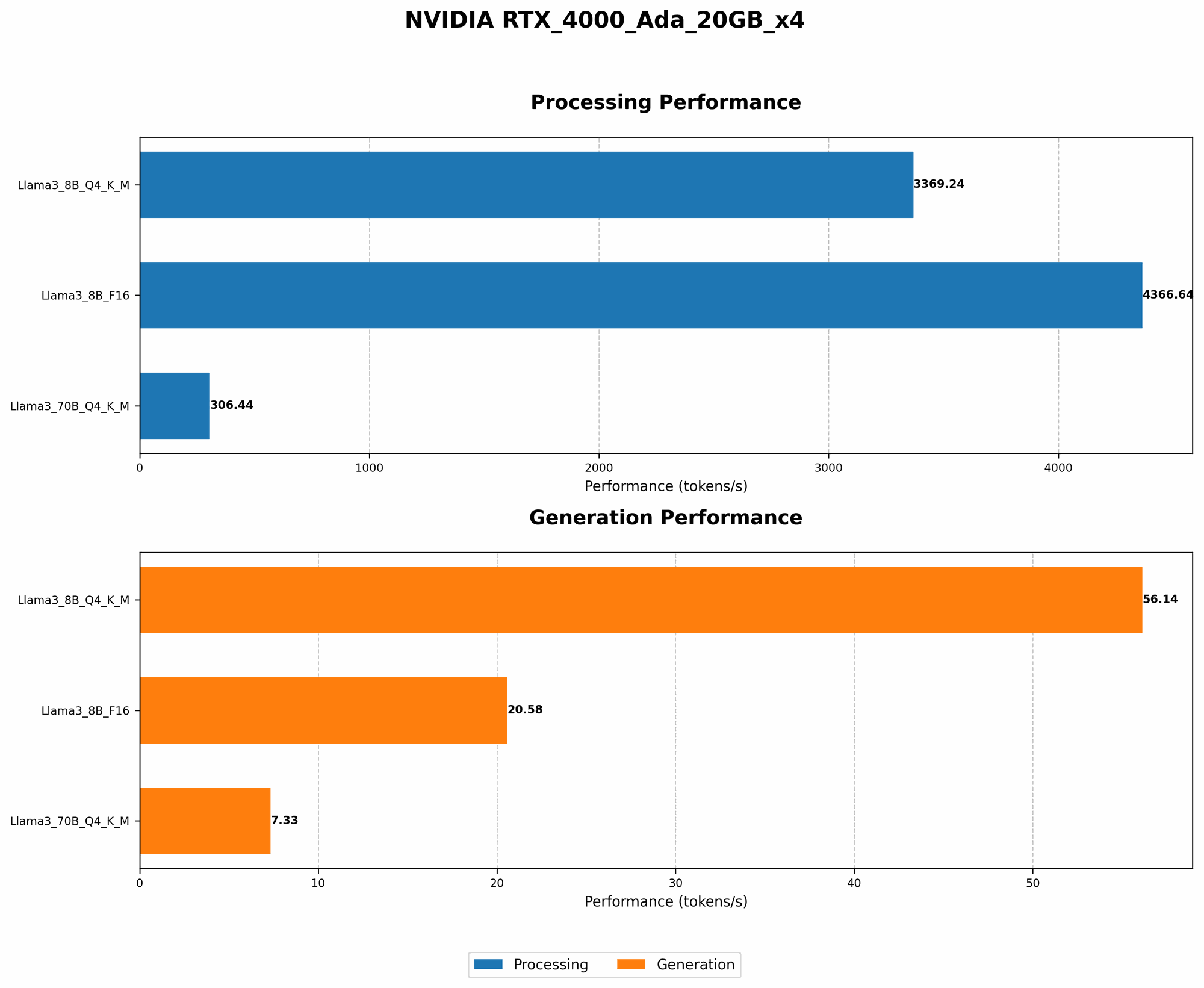
(Note: the data below is based on the information provided, there is no data for Llama 3 70B models on the RTX 4000 Ada 20GB.)
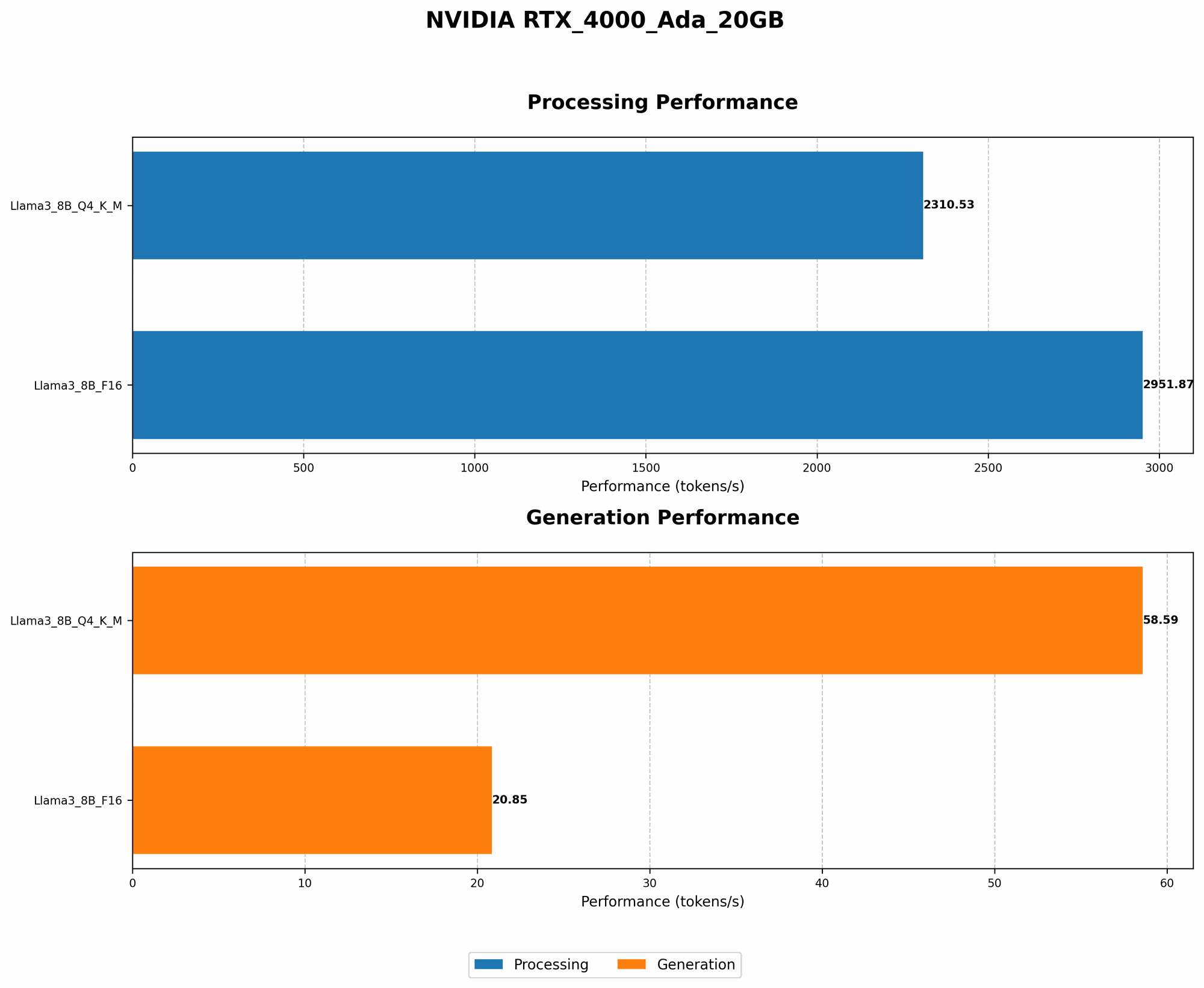
| Model | Tokenization Speed (Tokens/Second) | GPU Temperature (°C) |
|---|---|---|
| Llama 3 8B Q4 K M Generation | 58.59 | (Data Not Available) |
| Llama 3 8B F16 Generation | 20.85 | (Data Not Available) |
Understanding the Data
Some key takeaways from this data:
- Quantization: Llama 3 8B Q4 K M is a quantized version of the model, meaning it uses less memory and requires less processing power, leading to faster tokenization speeds.
- Precision: Llama 3 8B F16 uses 16-bit floating-point precision, resulting in a slight increase in memory usage and processing requirements compared to Q4 K M.
Overall, the RTX 4000 Ada 20GB shows decent performance with Llama 3 8B models.
Keeping the RTX 4000 Ada 20GB Cool: Your Cooling Arsenal
Now, let's dive into the cooling solutions that can help you keep your AI engine running cool and at peak performance:
1. Case Ventilation is Key
A well-ventilated PC case is crucial for keeping your GPU cool. Make sure there's enough airflow through the case to carry away heat from the GPU and other components.
- Fan Placement: Ensure your case fans are properly oriented for efficient airflow. Typically, you want intake fans at the front and exhaust fans at the rear or top.
- Case Design: Choose a case that's designed for good airflow, with mesh panels or open spaces to allow heat to escape.
2. Don't Skimp on the CPU Cooler
Your CPU is also a significant source of heat, and a good CPU cooler helps keep the entire system cooler.
- Air Coolers: For most users, a good air cooler with a large heatsink and multiple fans will be sufficient.
- Liquid Coolers: If you're pushing the limits of your hardware or want the absolute coolest running system, a liquid cooler can offer superior cooling performance.
3. GPU Air Coolers: A Proven Solution
GPU air coolers are a great way to improve airflow directly around your GPU. They typically include a large heatsink and multiple fans to efficiently dissipate heat. Some of the best air coolers on the market are specifically designed for NVIDIA GPUs like the RTX 4000 Ada 20GB.
4. GPU Liquid Coolers: Taking It to the Next Level
For the most demanding workloads and extreme thermal control, GPU liquid coolers are the way to go. They use a closed loop of liquid to transfer heat from the GPU to a radiator, where it's dissipated by fans.
- Immersion Cooling: While this might be overkill for most users, immersion cooling completely submerges the GPU in a liquid, allowing for extreme heat dissipation.
When the GPU Gets Hot: Understanding Performance Degradation
When your GPU overheats, the performance takes a hit. Here's how:
- Throttling: The GPU automatically reduces its clock speed to protect itself from overheating. This results in a noticeable decrease in performance, like a car engine sputtering when it runs too hot.
- Driver Crashes: Extreme heat can cause driver crashes and instability, leading to system freezes or unexpected shutdowns.
Managing Temperature with Software
While hardware cooling is paramount, software tools can also help manage GPU temperatures:
- Overclocking: While this can increase performance, it can also lead to higher temperatures. Proceed with caution and monitor your GPU's temperature closely.
- Underclocking: This involves reducing the GPU's clock speed, leading to lower temperatures but also a slight decrease in performance.
FAQ: Addressing Common Concerns
1. What if I don't have enough cooling?
If your system is overheating, the first step is to ensure adequate cooling. Upgrade your case fans, get a better CPU cooler, and consider a GPU air cooler. If the issue persists, look into a GPU liquid cooler for even better thermal control.
2. Can I run LLMs on a laptop?
While it's possible, running large LLMs on a laptop can be challenging due to limited cooling and power constraints. Choose smaller LLM models or look for laptops with powerful dedicated GPUs.
3. Why is it so important to keep the GPU cool?
Keeping your GPU cool ensures that it operates at peak performance. Overheating can lead to performance degradation, instability, and even damage to your GPU.
4. What is quantization, and why is it important?
Quantization is a technique for reducing the size of AI models while preserving accuracy. It's like fitting a massive library into a smaller backpack by using more efficient packing methods. This makes it easier to run AI models on less powerful devices and can significantly boost performance.
Keywords:
NVIDIA RTX 4000 Ada 20GB, LLM, Large Language Model, AI, Cooling Solutions, GPU Temperature, Tokenization, Llama 3, Quantization, Performance Degradation, Throttling, Case Ventilation, CPU Cooler, GPU Air Cooler, GPU Liquid Cooler, Overclocking, Underclocking