7 Cooling Solutions for 24 7 AI Operations with NVIDIA RTX 4000 Ada 20GB

Introduction
Running large language models (LLMs) locally, especially for 24/7 operations, can be a hot topic – literally! These AI models are powerhouses, capable of generating human-like text, translating languages, and writing different kinds of creative content. But this power comes at a cost: massive computing resources and, inevitably, heat.
With the advent of NVIDIA's RTX 4000 Ada 20GB, a powerful graphics card specifically designed for AI workloads, running LLMs locally has become more feasible. This article digs into the world of keeping your AI operations cool, offering practical tips and insights on optimizing your RTX 4000 Ada 20GB for continuous, high-performance processing.
The Heat is On: Understanding AI Power Consumption
Imagine a car engine: the more powerful the engine, the more heat it generates. Similar to a car engine, powerful AI models need a lot of processing power, which translates to heat dissipation being a major concern.
While we can’t completely eliminate heat, proper cooling strategies are crucial for maintaining stability, preventing hardware damage, and ensuring optimal performance. Let's look at some effective strategies for managing heat and keeping your RTX 4000 Ada 20GB cool under pressure.
7 Cooling Solutions for Your RTX 4000 Ada 20GB
1. Optimize Your System for Efficiency
Quantization for Reduced Memory Footprint: Quantization is like a data diet for your AI models. It essentially compresses the model's data by reducing its precision, making it smaller and faster. Think of it like making a smaller, lighter version of your LLM without sacrificing too much accuracy. This technique can significantly reduce memory usage and, in turn, the heat produced.
Model Selection: The Right Size for the Job: Just as you wouldn't use a super-tanker to cross a small lake, choose the right LLM for your needs. If you're only working with simple text generation tasks, a smaller, more efficient model like Llama 7B might be sufficient. Larger models like Llama 70B are overkill for such tasks.
Efficient Coding Practices: Just like a chef uses the right tools for the task, your code can also be optimized for efficiency. Use optimized libraries like Tensorflow or PyTorch, and pay attention to your code's memory management to minimize unnecessary overhead.
2. Invest in a Robust Cooling System
High-Performance CPU Cooler: A high-quality CPU cooler is essential for keeping your CPU cool, especially when paired with a powerful GPU. Consider models with efficient heatsinks and fans for optimal heat dissipation.
Dedicated GPU Cooler: The RTX 4000 Ada 20GB comes with its own built-in cooler, but for 24/7 operations, an aftermarket cooler can provide additional cooling capacity. Look for models with larger heatsinks, multiple fans, and efficient heat pipes.
Case Ventilation: Proper airflow in your computer case is crucial for cooling. Ensure your case has ample intake and exhaust fans for optimal airflow.
3. Monitor Your System's Temperatures
Monitoring Tools for Crucial Data: Track your GPU temperature, CPU temperature, and fan speeds using monitoring tools like HWMonitor or GPU-Z. This data will help you identify potential issues and optimize your cooling strategies.
Set Temperature Thresholds: Configure your system to trigger warnings or alarms when temperatures exceed predefined thresholds. This proactive approach helps prevent overheating and potential damage.
4. Optimize Your Environment
Cool Airflow: Ensure your system is placed in a well-ventilated area with ample airflow. Avoid placing it in enclosed spaces or near heat sources like radiators.
Air Conditioning for Extra Support: In hot climates, consider using air conditioning to maintain a cool environment. It might seem obvious, but a cool room can make a significant difference in your system's thermal performance.
Room Temperature Control: A comfortable room temperature for humans (around 72°F or 22°C) also works best for your computer.
5. Utilize the Power of Fans
Fan Curve Optimization: Adjust your fan curves to ensure optimal airflow based on system temperatures. This allows for quieter operation at lower temperatures and increased fan speed when necessary.
Multiple Fan Configurations: Consider adding additional fans to your case for enhanced airflow. Strategic placement of intake and exhaust fans can significantly improve cooling efficiency.
6. Reduce Power Consumption
Underclocking: Strike a Balance: Slightly reducing your GPU's clock speed (underclocking) can significantly affect your system's power consumption and heat generation. It's a bit like driving your car in a lower gear to conserve fuel. Find the sweet spot where you retain good performance while reducing heat and power consumption.
Power Management Settings: Configure your operating system's power management settings to limit power consumption and reduce heat generation when the system is idle.
7. Choose the Right Power Supply
Adequate Wattage: Ensure your power supply has enough wattage to handle the demands of your RTX 4000 Ada 20GB and other components. A power supply with a higher wattage rating can provide more efficient and stable power delivery, reducing heat generation.
High-Efficiency PSU: Look for a power supply with an 80+ Gold or Platinum efficiency rating. Higher efficiency means less power is wasted as heat, contributing to a cooler system.
Performance Insights with RTX 4000 Ada 20GB: Llama 3 Family
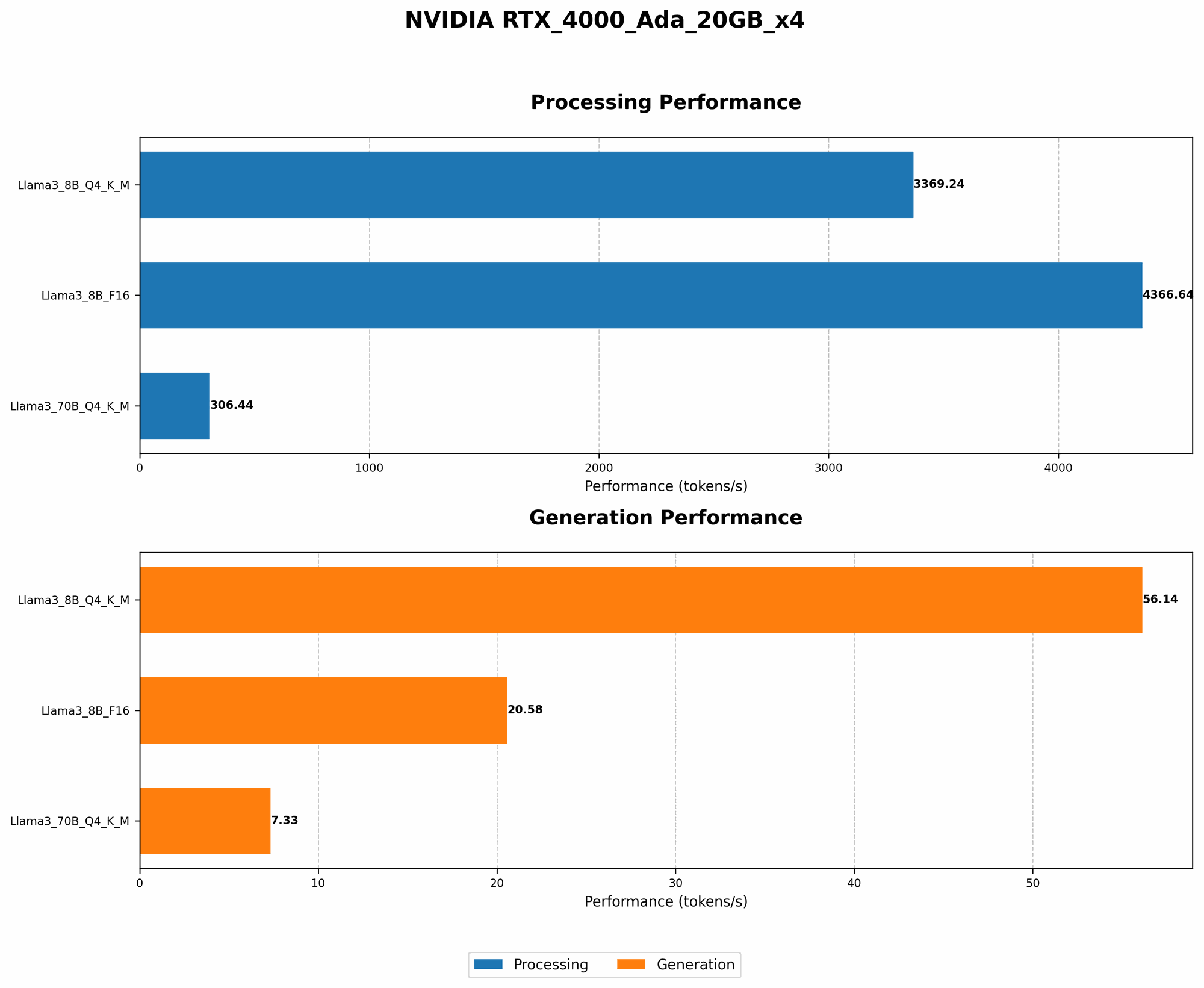
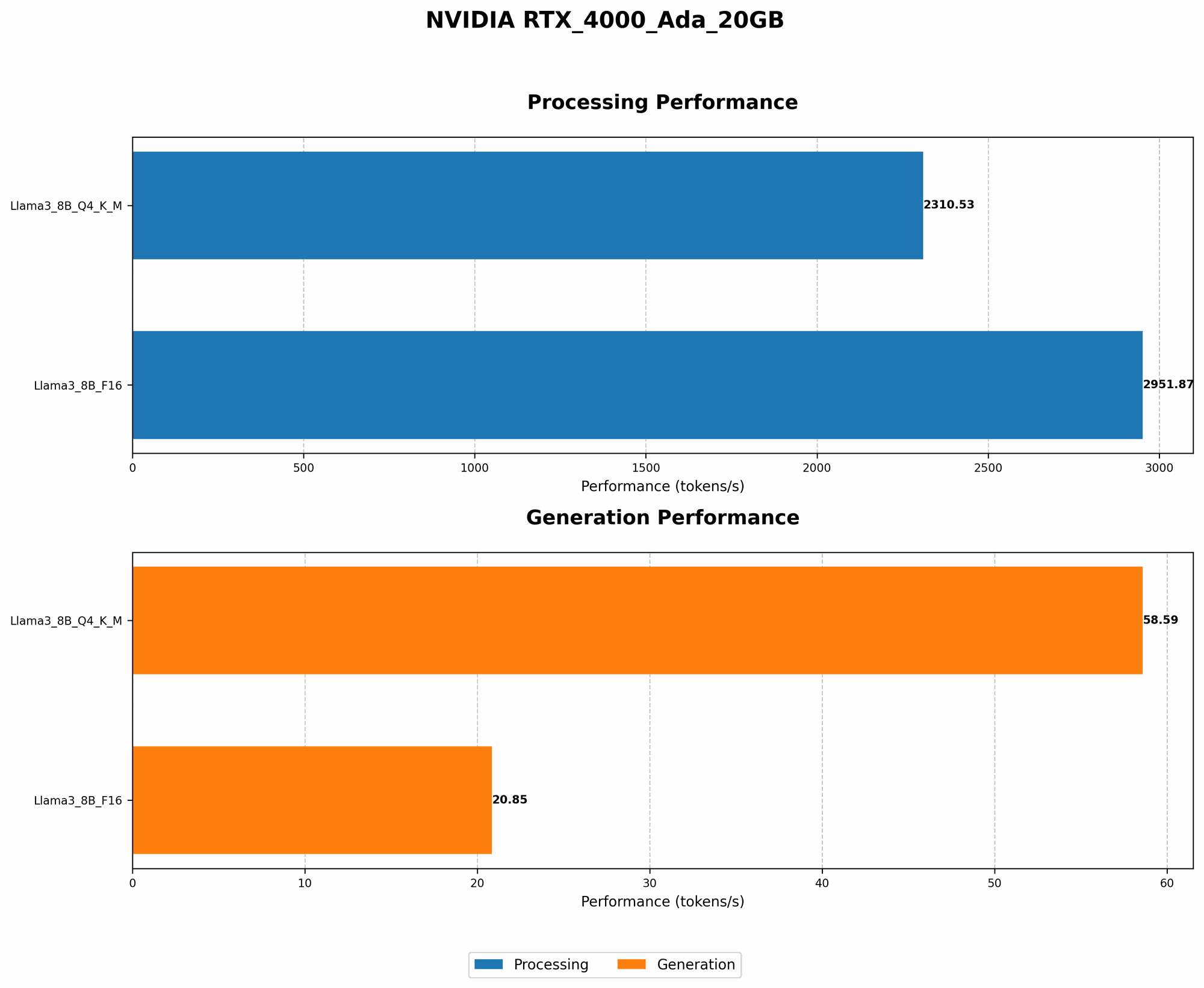
Comparison of Llama 3 8B Generation Speed with RTX 4000 Ada 20GB
| Model | Quantization | Tokens/Second (Q4KM) | Tokens/Second (F16) |
|---|---|---|---|
| Llama 3 8B | Quantized (Q4KM) | 58.59 | 20.85 |
| Llama 3 8B | Full Precision (F16) | N/A | N/A |
Data Interpretation:
The RTX 4000 Ada 20GB achieves impressive generation speeds for the Llama 3 8B model, hitting 58.59 tokens/second with Q4KM quantization and 20.85 tokens/second with F16 precision.
This indicates that the RTX 4000 Ada 20GB can handle the Llama 3 8B model efficiently, even with full precision.
The higher token generation speed with Q4KM quantization demonstrates the benefits of using this technique for reducing both memory footprint and heat production.
Comparison of Llama 3 8B Processing Speed with RTX 4000 Ada 20GB
| Model | Quantization | Tokens/Second (Q4KM) | Tokens/Second (F16) |
|---|---|---|---|
| Llama 3 8B | Quantized (Q4KM) | 2310.53 | 2951.87 |
| Llama 3 8B | Full Precision (F16) | N/A | N/A |
Data Interpretation:
The RTX 4000 Ada 20GB achieves remarkable processing speeds for the Llama 3 8B model.
With Q4KM quantization, the card processes 2310.53 tokens/second, and with F16 precision, it processes 2951.87 tokens/second.
These impressive speeds demonstrate the capability of the RTX 4000 Ada 20GB to handle computationally intensive tasks associated with LLMs efficiently.
Note: Data for Llama 3 70B model is not available, this is because the model is computationally demanding and currently requires more powerful devices than the RTX 4000 Ada 20GB to run effectively.
FAQ – Common Questions About LLM Cooling
What is quantization and how does it affect my AI model?
Quantization, in simple terms, is like a data diet for your AI model. It reduces the precision of the model's data by compressing it. This compression makes the model smaller and faster while maintaining acceptable accuracy. It's like making a smaller, lighter version of your AI model without sacrificing functionality.
Why is cooling important for AI models?
Just like any electronic device, high-performance AI models generate heat during operation. This heat can cause performance degradation, hardware damage, and even instability. Proper cooling ensures that your AI models function optimally and without risk.
Can I use my RTX 4000 Ada 20GB for other tasks besides running AI models?
Absolutely! The RTX 4000 Ada 20GB is a versatile card. It can be used for gaming, video editing, and other demanding tasks. Its power and efficiency make it ideal for a range of applications.
How do I know if my RTX 4000 Ada 20GB is getting too hot?
You can use monitoring tools like HWMonitor or GPU-Z to track your GPU temperature. If you notice the temperature exceeding the manufacturer's recommended limit, you may need to improve your cooling systems.
What are the different types of cooling systems available for my RTX 4000 Ada 20GB?
Several types of cooling systems are available, including air cooling, liquid cooling, and hybrid cooling. Each offers varying performance levels and price points. Consider your needs and budget when choosing a cooling system.
My RTX 4000 Ada 20GB is getting hot, should I immediately stop using it?
If you notice excessive heat, it's wise to stop using the card immediately. Excessive heat can lead to hardware damage and performance issues.
What are some other tips for optimizing my system for AI model performance?
Besides cooling, other optimization strategies include:
- Using the latest drivers: Ensure you have the latest drivers for your graphics card and motherboard.
- Optimizing your operating system: Disable unnecessary background processes and services.
- Using optimized libraries: Use libraries like Tensorflow or PyTorch for improved performance.
Keywords
RTX 4000 Ada 20GB, NVIDIA, AI, LLM, Llama 3, cooling, performance, GPU, quantization, token/second, processing speed, model generation, thermal management, fan curve, environment, power consumption, power supply, efficiency, AI operations, data interpretation, heat dissipation, optimized, stability, hardware damage, data diet, underclocking, FAQ, drivers, libraries